 English
 Español
 Português
 Français
 Italiano
 Deutsch
 Русский
 العربية
 हिन्दी
 Indonesia
 ไทย
ไทย Ελληνικά
 Nederlands
 Türkçe
 中文 (简体)
 日本語
日本語 한국어
한국어
Home > News Center > Industry knowledge > Planetary Stirring Cooking Mixer: 4 Heating Methods for Sauce & Food Processing
Industry knowledge
Planetary Stirring Cooking Mixer: 4 Heating Methods for Sauce & Food Processing
2026-08-11 11:33
Introduction: One Machine, Four Heating Methods
The planetary stirring cooking mixer is one machine — but it can be delivered with four different heating methods: steam, gas, electric induction, and thermal oil (which itself can be gas-heated or electric-heated). The vessel, the planetary stirring system and the stainless steel construction are the same; only the way heat reaches the product changes.
Why does this matter? Because the right heating method is matched to the product. Chili sauce, fruit jam, cheese sauce, caramel, fried nuts, meat processing — different products need different heat behavior, and this one machine platform covers them all. This guide explains the four heating methods and which products each one suits.
The Shared Core: Planetary Stirring System
Before comparing heating, understand the part every version shares — the reason this machine is trusted across the food industry.
A planetary stirring system moves like planets around the sun: the stirring paddle rotates on its own axis while the whole assembly slowly revolves around the center of the vessel. The result:
·No dead zones — every part of the batch passes through the stirring zone
·Constant wall wiping — scrapers continuously clean the vessel wall and bottom, preventing burning and sticking
·High-viscosity capability — thick products like chili paste, bean paste and caramel are mixed thoroughly
·Even cooking — the moving product spreads heat through the whole batch
This planetary stirring core is identical in all four heating versions. Your mixing performance never changes — only the heat source does.
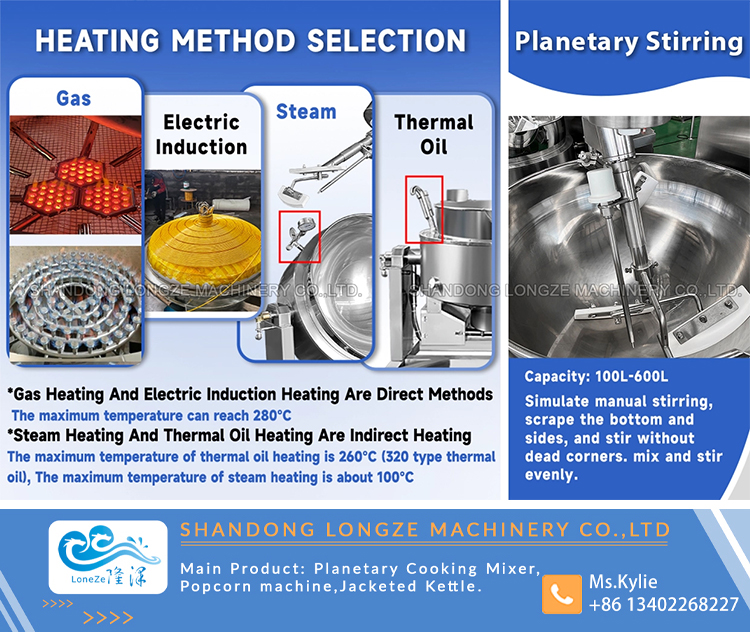
The Four Heating Methods
1. Steam Heating
The vessel is surrounded by a double wall (the "jacket"). Steam circulates between the walls and transfers heat evenly across the whole heating surface at a naturally capped temperature (typically 100–130 °C jacket temperature).
·Advantages: gentle, even heat; fine temperature control via the steam valve; very low scorching risk
·Requirement: a steam boiler on site
·Best for: fruit jam, dairy-based sauce, cheese sauce, caramel, toffee — products that burn easily and need precise low-temperature control
2. Gas Heating
A gas burner heats the vessel directly from below, with output adjustable up and down as the recipe demands.
·Advantages: fast heat-up; no boiler required — connect to the gas supply and start producing
·Requirement: gas supply and adequate ventilation/flue
·Best for: chili sauce, bean paste, hotpot condiment, frying steps — sturdy products where fast, strong heat is an advantage
3. Electric Induction Heating
An electromagnetic coil generates heat directly in the vessel wall — no flame, no combustion.
·Advantages: very precise temperature control; fast response; clean and flue-free; high energy efficiency; low heat loss to the workshop
·Requirement: a three-phase power supply
·Best for: modern plants prioritizing cleanliness and precision; heat-sensitive sauces, curry paste, and products that need exact repeatable temperatures
4. Thermal Oil Heating
Heat-transfer oil circulates through the jacket in a closed loop, heated by a gas burner or an electric heater (both options are available). The oil is heated once, then delivers stable, uniform high temperatures for long periods.
·Advantages: uniform high-temperature capability; stable heat retention batch after batch; both gas-heated and electric-heated oil systems available
·Requirement: a thermal oil heating unit and piping
·Best for: sustained high-temperature cooking and frying — nut frying, high-viscosity products, and processes that hold temperature for a long time
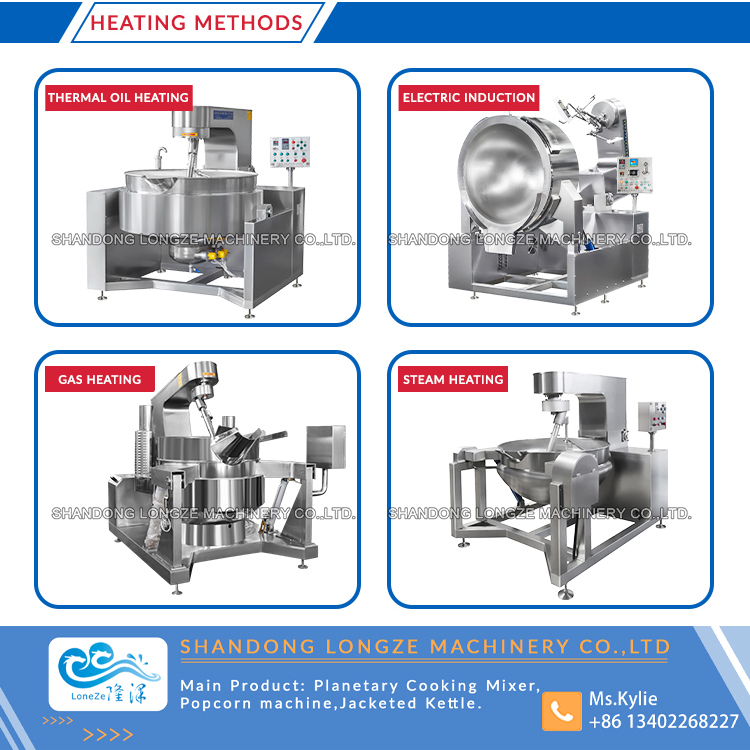
Heating Methods Compared
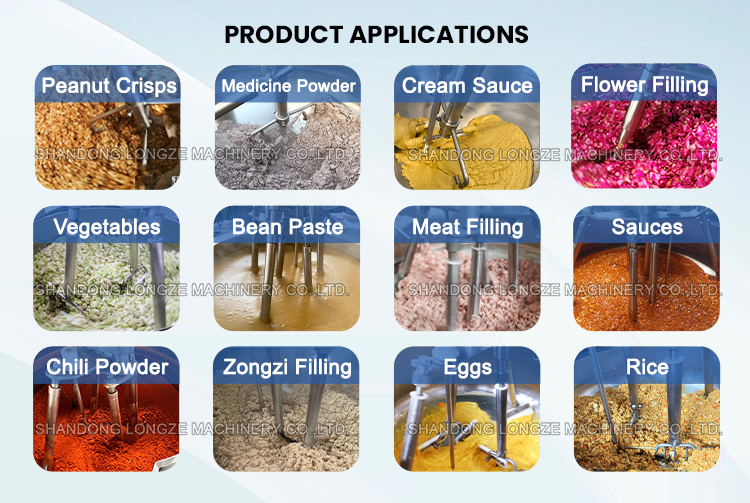
Which Heating for Which Product?
Summary
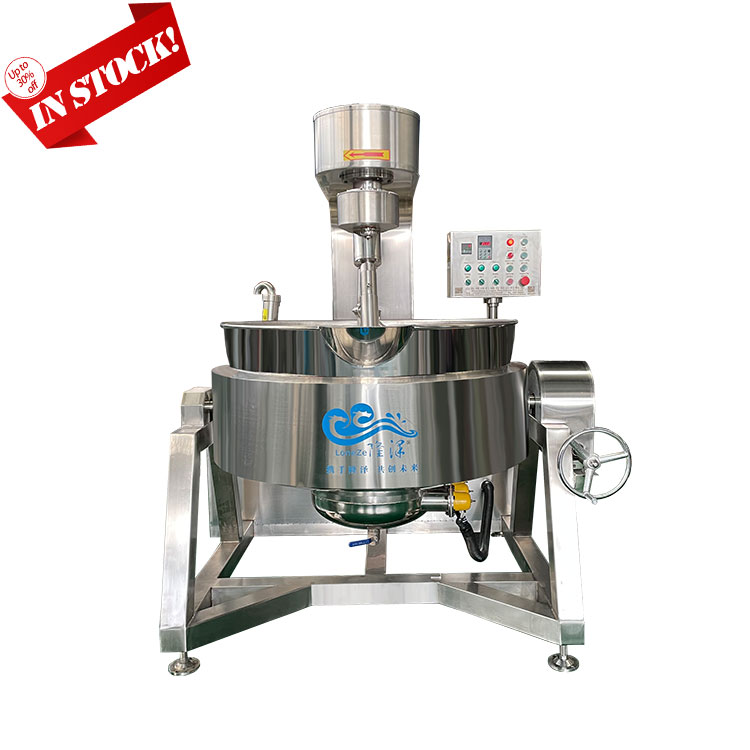
The planetary stirring cooking mixer is one machine with a wide application range — spanning sauces, jams, dairy, confectionery, frying and meat processing — because it offers four heating methods: steam, gas, electric induction and thermal oil. The stirring is always planetary; the heating is your choice. Pick the method that matches your product and your energy infrastructure, and the same machine platform can follow your product range as it grows.
Want to know which heating method fits your product line? Contact Longze Machinery at kylie@loneze.com or +86 13402268227 — we manufacture the planetary stirring cooking mixer in all four heating versions: steam heating, gas heating, electric induction heating and thermal oil heating.

The planetary stirring cooking mixer is one machine — but it can be delivered with four different heating methods: steam, gas, electric induction, and thermal oil (which itself can be gas-heated or electric-heated). The vessel, the planetary stirring system and the stainless steel construction are the same; only the way heat reaches the product changes.
Why does this matter? Because the right heating method is matched to the product. Chili sauce, fruit jam, cheese sauce, caramel, fried nuts, meat processing — different products need different heat behavior, and this one machine platform covers them all. This guide explains the four heating methods and which products each one suits.
The Shared Core: Planetary Stirring System
Before comparing heating, understand the part every version shares — the reason this machine is trusted across the food industry.
A planetary stirring system moves like planets around the sun: the stirring paddle rotates on its own axis while the whole assembly slowly revolves around the center of the vessel. The result:
·No dead zones — every part of the batch passes through the stirring zone
·Constant wall wiping — scrapers continuously clean the vessel wall and bottom, preventing burning and sticking
·High-viscosity capability — thick products like chili paste, bean paste and caramel are mixed thoroughly
·Even cooking — the moving product spreads heat through the whole batch
This planetary stirring core is identical in all four heating versions. Your mixing performance never changes — only the heat source does.
The Four Heating Methods
1. Steam Heating
The vessel is surrounded by a double wall (the "jacket"). Steam circulates between the walls and transfers heat evenly across the whole heating surface at a naturally capped temperature (typically 100–130 °C jacket temperature).
·Advantages: gentle, even heat; fine temperature control via the steam valve; very low scorching risk
·Requirement: a steam boiler on site
·Best for: fruit jam, dairy-based sauce, cheese sauce, caramel, toffee — products that burn easily and need precise low-temperature control
2. Gas Heating
A gas burner heats the vessel directly from below, with output adjustable up and down as the recipe demands.
·Advantages: fast heat-up; no boiler required — connect to the gas supply and start producing
·Requirement: gas supply and adequate ventilation/flue
·Best for: chili sauce, bean paste, hotpot condiment, frying steps — sturdy products where fast, strong heat is an advantage
3. Electric Induction Heating
An electromagnetic coil generates heat directly in the vessel wall — no flame, no combustion.
·Advantages: very precise temperature control; fast response; clean and flue-free; high energy efficiency; low heat loss to the workshop
·Requirement: a three-phase power supply
·Best for: modern plants prioritizing cleanliness and precision; heat-sensitive sauces, curry paste, and products that need exact repeatable temperatures
4. Thermal Oil Heating
Heat-transfer oil circulates through the jacket in a closed loop, heated by a gas burner or an electric heater (both options are available). The oil is heated once, then delivers stable, uniform high temperatures for long periods.
·Advantages: uniform high-temperature capability; stable heat retention batch after batch; both gas-heated and electric-heated oil systems available
·Requirement: a thermal oil heating unit and piping
·Best for: sustained high-temperature cooking and frying — nut frying, high-viscosity products, and processes that hold temperature for a long time
Heating Methods Compared
| Factor | Steam | Gas | Electric induction | Thermal oil |
| Temperature uniformity | Even over jacket | Even with stirring; hotter near flame | Very even | Very even, stable |
| Control precision | Fine | Good | Excellent | Good, steady |
| Heat-up speed | Moderate | Fast | Fast | Moderate |
| Scorching risk | Low (capped temp) | Higher near flame | Low | Low |
| Energy required | Steam generator or boiler | liquefied petroleum gas or natural gas | Three-phase power required |
·liquefied petroleum gas or natural gas ·Three-phase power required |
| Energy efficiency | Good | Moderate | High | High for sustained heat |
| Cleanliness | Clean process | Combustion | Cleanest | Closed loop |
| Typical capacity | 100L-600L | 100L-600L | 100L-600L | 100L-600L |
Which Heating for Which Product?
| Product / application | Recommended heating | Why |
| Chili sauce, bean paste, hotpot condiment | Gas or thermal oil | Sturdy products; strong sustained heat |
| Fruit jam, marmalade | Steam or induction | Gentle heat preserves color and flavor |
| Dairy-based sauce, cheese sauce | Steam or induction | Capped, precise temperature protects the emulsion |
| Caramel, toffee, hard candy base | Steam or induction | Precise temperature stages without burning |
| Curry paste, aromatic pastes | Induction | Exact repeatable temperatures |
| Nut frying, deep frying | Thermal oil or gas | Sustained high temperature for crisp results |
| High-viscosity filling and paste | Thermal oil | Stable heat holds long processing times |
| Fried rice, stir-fried dishes | Gas or induction | Fast heat with strong stirring |
Summary
The planetary stirring cooking mixer is one machine with a wide application range — spanning sauces, jams, dairy, confectionery, frying and meat processing — because it offers four heating methods: steam, gas, electric induction and thermal oil. The stirring is always planetary; the heating is your choice. Pick the method that matches your product and your energy infrastructure, and the same machine platform can follow your product range as it grows.
Want to know which heating method fits your product line? Contact Longze Machinery at kylie@loneze.com or +86 13402268227 — we manufacture the planetary stirring cooking mixer in all four heating versions: steam heating, gas heating, electric induction heating and thermal oil heating.
Quick Navigation
Company Profile
Shandong Longze Machinery Co., Ltd. is a scientific research, production, sales service in one of the enterprises. Located in the famous dinosaur town - Zhucheng, the company over the years committed to the development trend of the food industry, the traditional hand-workshop processing reform for the automation, standardization of production. Through automation design and manufacturing for enterprises to save manpower, improve production rate, reduce production costs. Service customers include baking fillings fried industry, meat products cooked food processing industry, condiment industry, candy industry, vegetable corn processing industry, hotel supplies and fast food and other food processing industry, providing heating and cooking frying, vacuum concentration, sterilization Disinfection and other series of equipment.
PRODUCT categories
TO CHEATE EXCELLENT BOUTIQUE
TO CHEATE EXCELLENT BOUTIQUE
Contact
Address: Zhucheng District ,Weifang City, Shandong Province,China Tel:+86 13070769155 Email: Gussie@loneze.com
Address: Zhucheng District ,Weifang City, Shandong Province,China Tel:+86 13070769155 Email: Gussie@loneze.com
 Why Our Industrial Popcorn Machines Are Built for Large-Scale Factories
In the competitive snack food industry, scaling up production while...
Read More Horizontal Vacuum Cooking Mixer: The Ideal Solution for Fillings, Sauces and Jams
In the modern food processing industry, consistency, efficiency and...
Read More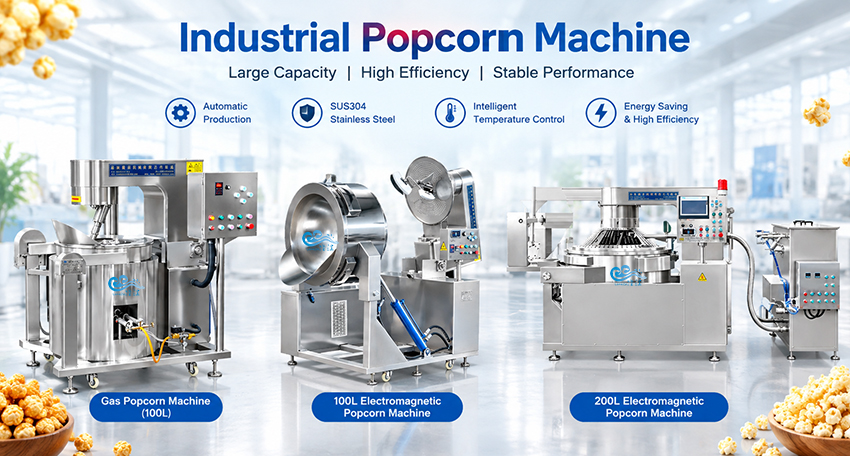 Industrial Popcorn Machine for Snack Food Factories | Oil-Popped Popcorn Production
Industrial Popcorn Machine for Large-Scale S...
Read More Invitation to Visit Shandong Longze Machinery at MIHAS 2026/Gas Heating Cooking Machine
Meet Us at the 22nd Malaysia International H...
Read More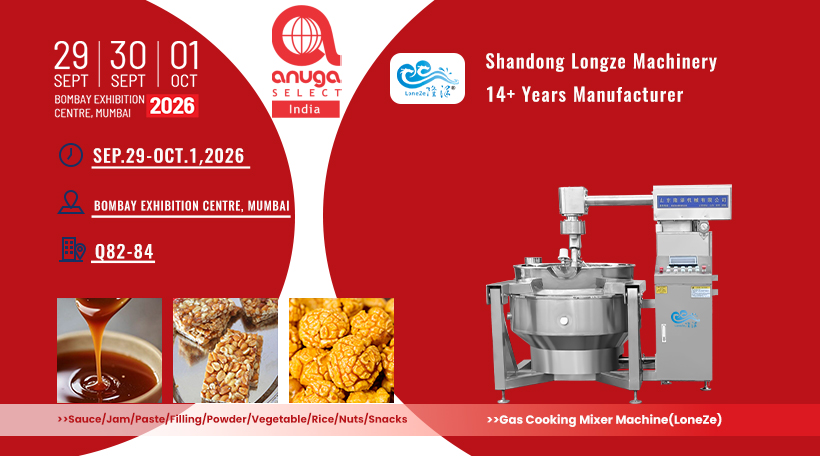 From Manual to Automated: Scaling Your Food Business with Longze at Anuga Select India 2026
We will exhibit at Anuga Select India 2026, one of Indias leading food and beve...
Read More Planetary Stirring Cooking Mixer: 4 Heating Methods for Sauce & Food Processing
Introduction: One Machine, Four Heating Meth...
Read More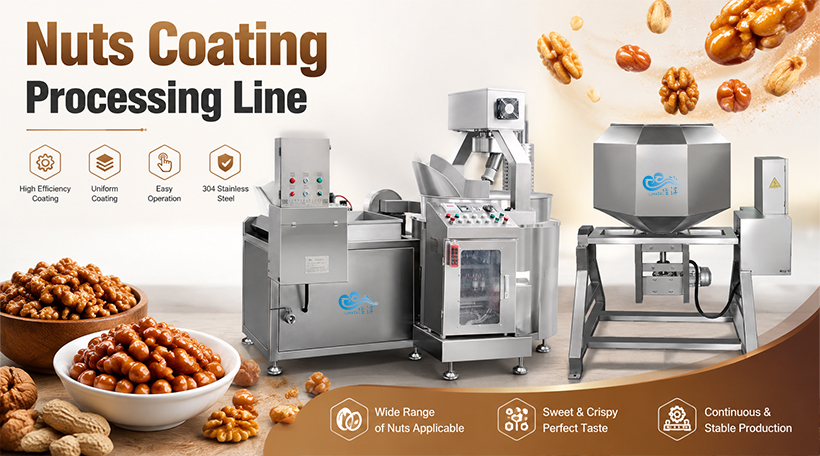 Boost Your Snack Business with Our Automatic Nut Sugar Coating & Frying Production Line
...
Read More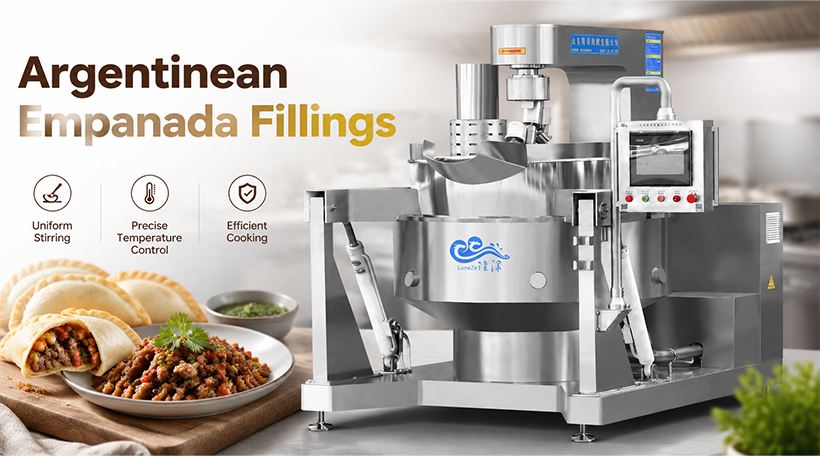 Industrial Cooking Mixer for Authentic Argentinean Empanada Fillings
Looking to scale your Argentinean Empanada production? Our industri...
Read More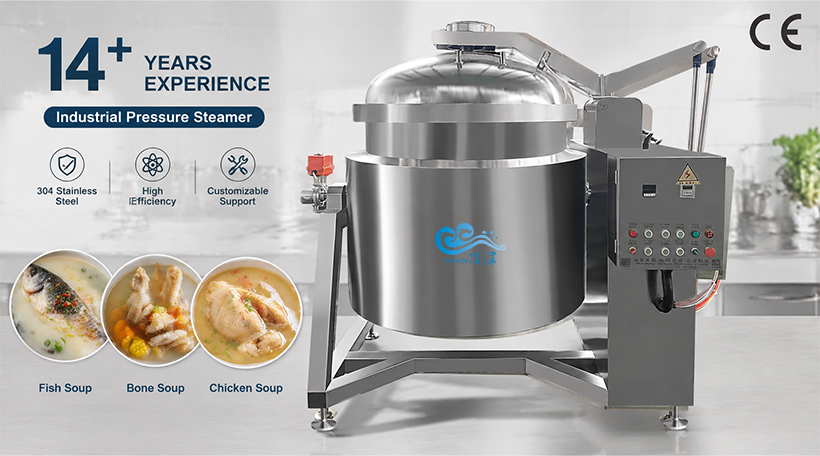 Industrial Pressure Cooker for Bone Broth & Soup Production
Our industrial pressure cooker is suitable for producing bone broth...
Read More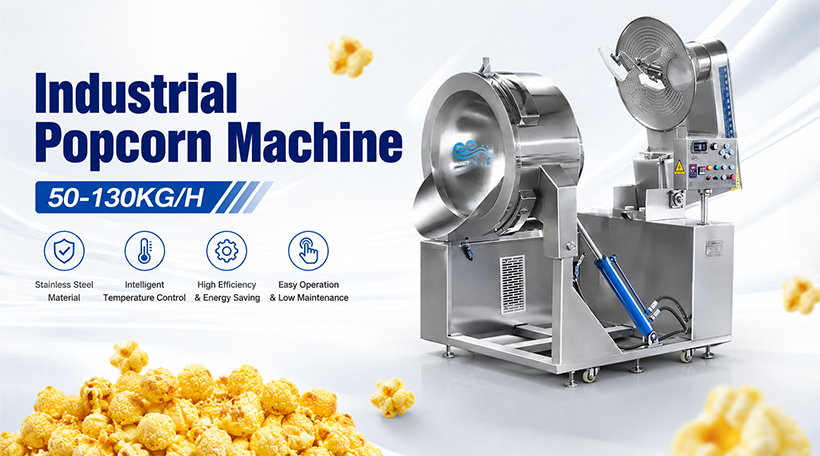 Industrial Popcorn Machine: Gas & Electromagnetic Heating for 50–130 kg/h Production
Why an Industrial Popcorn Machine Beats Small-Scale Poppers...
Read More